
Guide
Writing a cleaning scope of work for a Livermore building, area by area
Think of the scope of work as the page that names which rooms get cleaned, what happens in each one and how often. Settling it before service starts is the surest way to make the routine you pay for match the routine your building needs.
Request a quoteCall (925) 718-0398
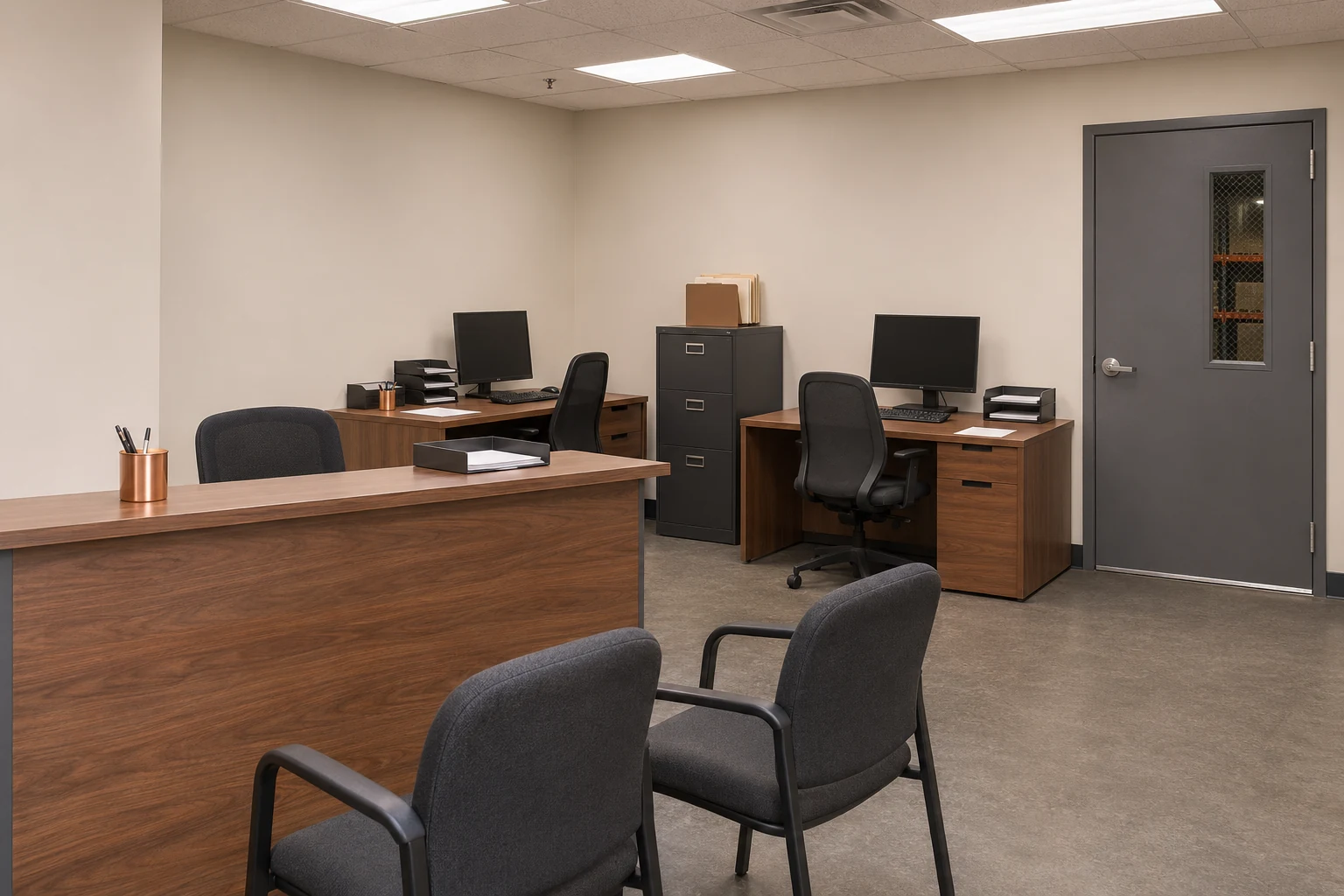
What a scope of work does
Every cleaning arrangement rests on a list, whether or not anyone calls it a scope. Spelled out properly, it names the areas in the routine, the tasks inside each area and how often each task happens. It becomes the shared reference for the building manager, the cleaners and anyone who later asks why a room looks the way it does.
Most cleaning disagreements trace back to a vague scope. A line such as clean offices nightly leaves open whether desks are wiped, whether the bin beside each desk is emptied and whether the breakroom counts as an office. A precise scope answers those questions before the first visit, so later conversations are about results rather than definitions.
In Livermore the same format serves a downtown office suite, a medical practice, the administrative wing of a warehouse and the office side of a research building. What changes from one to the next is the room list and the weight given to each room.
Tasks by area, from entrance to restroom
Entrances and reception make the first impression, so the scope lists counters, seating, door handles and light switches, plus the trash point by the door. Litter outside the entrance during business hours belongs to porter work, and a good scope says which service owns it.
Offices and conference rooms cover work surfaces, shared touch points, bins and recycling. Conference rooms with glass walls deserve a line of their own because they take extra detail time. Restrooms are the most task-dense area of all: fixtures, counters and floors sanitized, then paper products, soap and liners restocked from our supply or the building’s.
Kitchens and breakrooms come next, with counters, sinks, appliance handles and tables wiped and supplies refilled. Floors close the list in two parts: the routine floor work done on each visit, and periodic treatments such as scrubbing, recoating, polishing, burnishing and carpet extraction, which belong in the scope as scheduled jobs rather than nightly tasks.
Nightly, weekly, monthly and periodic
Sorting tasks by frequency is where a scope earns its keep. Nightly tasks are the ones that show use within a day: restrooms, breakroom counters, trash and recycling, and the touch points at entrances. Weekly tasks cover rooms that collect use more slowly, such as quieter conference rooms and private offices on an alternating rotation.
Monthly and periodic tasks are the deeper work: spot treatment and carpet extraction in walkways, scrubbing or burnishing of hard floors and a thorough pass through rarely used rooms. Give each of these a planned month in the scope, since a periodic task without a date tends to wait until the floor itself starts showing the neglect. The Livermore cleaning cost guide shows how each of these lines is priced.
Setting the frequency for each area by its traffic
The right frequency for an area comes from its traffic, not its size. A restroom by the main entrance of a busy office takes more use in a day than a large conference room booked twice a week. Count who uses each room and when, and the frequency for that room follows from the count.
A split often works well: daily care for restrooms, kitchens and trash, with lighter rooms on alternating visits. When common areas fall behind during business hours even with nightly visits, the fix is usually porter coverage rather than a longer nightly list, and the guide to day porters and nightly cleaning walks through that choice.
Shift buildings add one more variable. Breakrooms and locker areas in a multi-shift warehouse peak at each handover, so their tasks are timed to the shift calendar rather than to a fixed hour.
Services a Livermore scope draws on
Most scopes combine several services. Office cleaning in Livermore carries the nightly core of work surfaces, restrooms and recycling. Day and night porters look after common areas, refills and exterior litter during the hours people are in the building, and periodic floor care and carpet extraction sit on the longer calendar.
When a building changes, a one-time commercial clean resets the space before the routine starts, and construction cleaning handles progress, phased, final and touch-up visits after a remodel or tenant improvement. Each of these belongs in the scope as its own line with its own timing.
Reviewing and updating the scope
A scope written for last year’s headcount drifts out of step without anyone noticing. Review it when staff numbers change, when a floor is remodeled, when a room takes on a new purpose or when a tenant moves in or out. The quickest test is a walk through the building with the scope in hand, checking each line against the room as it is now; the printable checklists on our free tools and templates page make that walk quicker.
Changes go into the Facility notes and the next walkthrough, and the revised routine then repeats on every visit. Keeping one current version, dated and shared with whoever manages the building, prevents the slow confusion of old instructions taped inside a supply closet.
A few useful answers
Quick answers
What does a scope of work do for a Livermore building?
It is the list of areas, tasks and frequencies that defines a cleaning routine. It tells everyone involved what happens in each room and how often.
How detailed should a scope of work be for a small office?
Detailed enough that two people reading it would clean the same things. Name each room, the tasks in it and whether they happen nightly, weekly or on a periodic schedule.
Where do carpet extraction and floor treatments go in the scope?
On the periodic calendar, each with a planned month. Listing them as scheduled jobs keeps them from being skipped or squeezed into a nightly visit.
What signals that a Livermore scope needs revising?
Whenever headcount, room use or tenancy changes, and after any remodel. A walk through the building with the current scope shows which lines no longer fit.
Resources
Related guides
Services