
Guide
Keeping Livermore breakrooms and locker areas clean between shifts
In a Livermore building that runs more than one crew, the breakroom, restrooms and locker area take their hardest use in the minutes around each handover. This guide explains how to schedule cleaning into those gaps while your facility’s own rules decide where and when the work happens.
Request a quoteCall (925) 718-0398
Start with the shift calendar
A distribution building might run an early crew, a late crew and a weekend team, while a research building keeps one long day with staggered lunches. On a floor plan their support rooms look alike, but the right cleaning schedule for each comes from the clock rather than the square footage.
Before choosing visit times, write down when each crew arrives, when breaks cluster, when one group hands the building to the next and when the quietest stretch of the week falls. Those moments show where a cleaning visit does the most good and where it would only get in the way of people trying to eat, change or clock in.
In most multi-shift buildings the useful windows are short: the stretch after a break wave ends, the gap between one crew leaving and the next arriving, and the weekend or overnight lull. Recurring visits go into those windows, and porter rounds carry the support rooms through the rest of the day.
Which rooms carry each handover
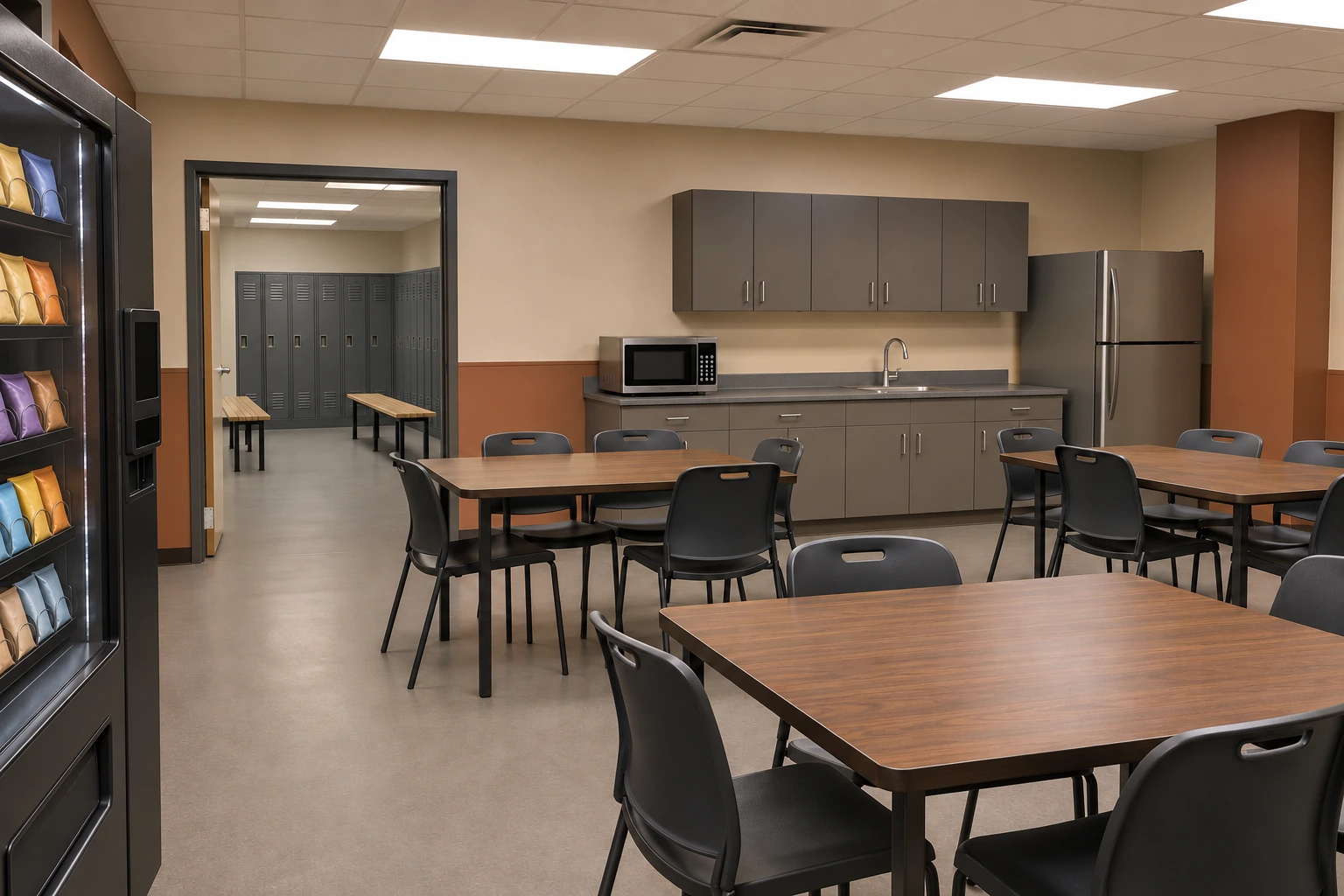
Breakrooms take the sharpest spike. Counters, tables, microwave and refrigerator handles, and the trash and recycling points fill up fast when a whole crew eats in the same window, and the incoming crew judges the room by the state the last one left it in.
Staff restrooms come next. Paper products, soap and liners run down quickest at shift change, so restocking belongs in the visit that lands just before a new crew walks in, along with sanitation of fixtures and the door handles everyone touches on the way out.
Locker and changing areas, entry corridors and the wall by the time clock see a short burst of traffic and then sit quiet for hours. Benches, handles and shared touch points there are wiped on the regular visit. The front office follows its own lighter rhythm, much like a standard office cleaning routine in a stand-alone suite.
Your site rules set the boundaries
Every working facility has its own protocols, and cleaning fits inside them. Your team decides which areas cleaners may enter, which entrance cleaners use, where they check in and which rooms stay closed during a run. Industrial and warehouse cleaning covers the shared interior, and warehouse aisles and dock floors can be scrubbed during a shutdown through floor care.
Spell those rules out in the Facility notes field when you request a quote, then walk through them with us before the quote. Seeing the doors, the posted break schedule and the routes crews take makes it straightforward to plan visits that never cross a restricted line.
When the rules change, such as a new restricted zone or a breakroom moved to another wing, the schedule changes with them. A short note before the next visit keeps the routine matched to how the building actually runs that week.
Production runs, shutdowns and slow weeks
Long production runs push breaks later and stretch the time between visits, so restrooms and breakrooms can fall behind even when the schedule looks right on paper. During those weeks, an added visit or extra porter hours keep the support spaces level with the heavier use.
Planned shutdowns work the other way. With crews off site, a one-time cleaning visit can reach corners of the support areas that are hard to clear on a normal day, and hard floors in shared corridors and breakrooms can get scrubbing, recoating or burnishing without foot traffic in the way. Carpeted offices in the same building can receive hot water extraction during that window too.
If a shutdown includes a tenant improvement in the office wing, construction cleaning clears the dust and leftover residue first, and the recurring routine picks back up once crews return.
Porter coverage for the busiest hours
Between full visits, a porter keeps the support spaces from sliding. A day porter loops through restrooms and breakrooms, refills paper products, soap and liners, clears full trash points and picks up loose litter around entrances and the edges of parking areas.
Buildings that run an evening crew can use night porter service the same way, so the late shift finds the stocked restrooms and orderly breakroom the day crew had. Full sanitation still comes from the recurring janitorial visit; the porter’s part is holding that standard through the hours people are using the rooms. Our guide to choosing between a day porter and nightly janitorial explains how the two divide the work.
A few useful answers
Quick answers
When should a breakroom be cleaned in a building with two shifts?
Schedule it for the gap after the first crew’s last break and before the second crew arrives. Each crew then starts with a clean room instead of inheriting the previous crew’s mess.
What changes about cleaning during a planned shutdown?
A shutdown opens time for one-time cleaning and periodic floor care in shared areas that are too busy on a normal day. The recurring routine resumes when crews come back.
Who decides where cleaners can go inside a working facility?
Your facility does. Open areas, entrances, check-in steps and closed zones come from your own protocols, and the cleaning schedule is built around them.
How do restrooms stay stocked between visits on a long shift?
A day or night porter refills paper products, soap and liners during the shift, so supplies keep pace with the crew until the next janitorial visit.
Industries
Related industries
Services